The best hire I've ever made had zero product marketing experience. He'd co-founded a company, had sharp strategic instincts and entrepreneurial grit, but had never written a positioning doc, run a competitive analysis, or built a launch plan. His interview presentation was memorable for its authenticity, if not its design.
I chose him over a more polished candidate because I saw something harder to teach: the ability to think from first principles, a genuine hunger to learn, and an ownership mindset. Those things don't come from coaching.
Today, he's the go-to person for our COO's most urgent requests, from board deck prep to last-minute strategic analyses. His trajectory from PMM to Senior PMM has been one of the most rewarding things I've been part of as a leader.
What made the difference was being intentional about the coaching, and having a structure that made growth visible to both of us.
Four things I do consistently
Regardless of where someone starts, I come back to the same four things.
I lead by example. Junior PMMs don't yet know what "great" looks like. They need to see it in your writing, your presentations, your stakeholder interactions, your thinking. Every deliverable I produce is a teaching moment.
I anchor feedback in a career framework. I tie every piece of feedback, positive or constructive, to a specific competency. This takes the vagueness out of growth conversations and gives people something concrete to work toward.
I praise publicly. When someone delivers exceptional work, I make sure the right people know. It builds credibility across the organization in a way that private recognition doesn't.
I stretch people deliberately. The fastest way to develop strategic instincts is to put someone on a strategically complex project. I assign junior PMMs to ambiguous, high-impact work on purpose.
The Functional Capabilities Framework
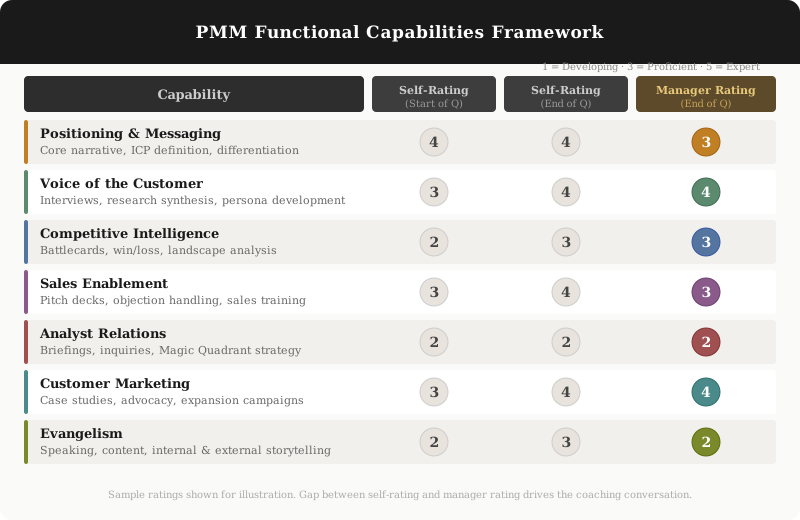
Coaching conversations are only as good as the structure behind them. A few years ago I built a Product Marketing Functional Capabilities Framework to use alongside traditional career ladders.
It's a simple table. The rows are the core PMM capabilities: positioning and messaging, voice of the customer, competitive intelligence, sales enablement, analyst relations, customer marketing, and evangelism. The columns capture ratings: one for the PMM's self-assessment, one for mine as their manager. At the start of each quarter, every PMM on my team identifies the areas they want to grow in. They rate themselves at the beginning and end of the quarter. I add my own end-of-quarter assessment.
The comparison between the two is where the real coaching happens. The most valuable conversations come from the gaps, those moments of recalibration where actual self-awareness gets built.
When coaching gets complicated
Not every story has a clean arc. One of the harder situations I've managed was inheriting a team member who'd been with the company for three years and was frustrated about not being promoted. He had real seniority and real effort. The gaps were harder to name.
I used the same framework. Over several months of weekly check-ins and two formal performance reviews, a clearer picture emerged: he was exceptional at working with people, cross-functional relationships, stakeholder management, keeping complex projects moving, but he was struggling with the creative demands of a marketing function. The kind of work that requires generating ideas, crafting narratives, finding the unexpected angle. That's not a skills gap you can close with coaching.
Rather than managing him out, I helped him find a project management role that played directly to his strengths. He's thriving.
That experience reinforced something I think about a lot: good management isn't only about accelerating high performers. Sometimes it means being honest enough, and compassionate enough, to tell someone their path is somewhere else.
Where to start
If you're building this muscle on your team, commit to using a functional framework consistently, tie feedback to specific behaviors, and give people projects that scare them a little.
Over time, you build a team that trusts you and a reputation for developing talent. Great PMMs want to work for managers who invest in them.