The unglamorous, slightly absurd art of making 5,000 employees care about your product launch
Every launch playbook obsesses over the external. The press embargo. The analyst briefing. The landing page. The paid campaign. The social blitz. All of it aimed at the market, at prospects, at customers.
And all of it quietly falls apart when your own recruiter can't explain what you just launched, your regional sales team learned about it from a customer, and your Singapore office found out through Twitter.
Internal evangelism is a launch competency. And most marketing organizations are genuinely terrible at it.
The Problem Is Structural
The standard playbook for internal launch communication is a company-wide email and a mention at the all-hands. Maybe a Slack post. This checks the box of informing people. But informing is not the same as enrolling.
You are trying to recruit an army of people who will carry your message into every conversation they have, with candidates, with partners, with customers, with their own networks.
Here's the surface area problem most people miss:
- Recruiters are selling your company story every single day
- Regional marketing teams are adapting global narratives for local markets
- Sales reps are fielding questions they were never briefed on
If these people don't feel the launch in their bones, your carefully crafted external narrative has a massive dilution problem before it even hits the market.
Make It Physical. Make It Weird. Make It Unavoidable.
The most effective internal evangelism is tactile and slightly ridiculous. People scroll past emails. They skip Slack channels. They tune out all-hands presentations.
What they cannot ignore is a physical environment that has been altered around them.
The best internal launch moments I've pulled off share a few things:
- They interrupted routine
- They were impossible to explain away with a glance
- They made people ask each other "wait, what is this?"
Example: The Twilio CLI launch
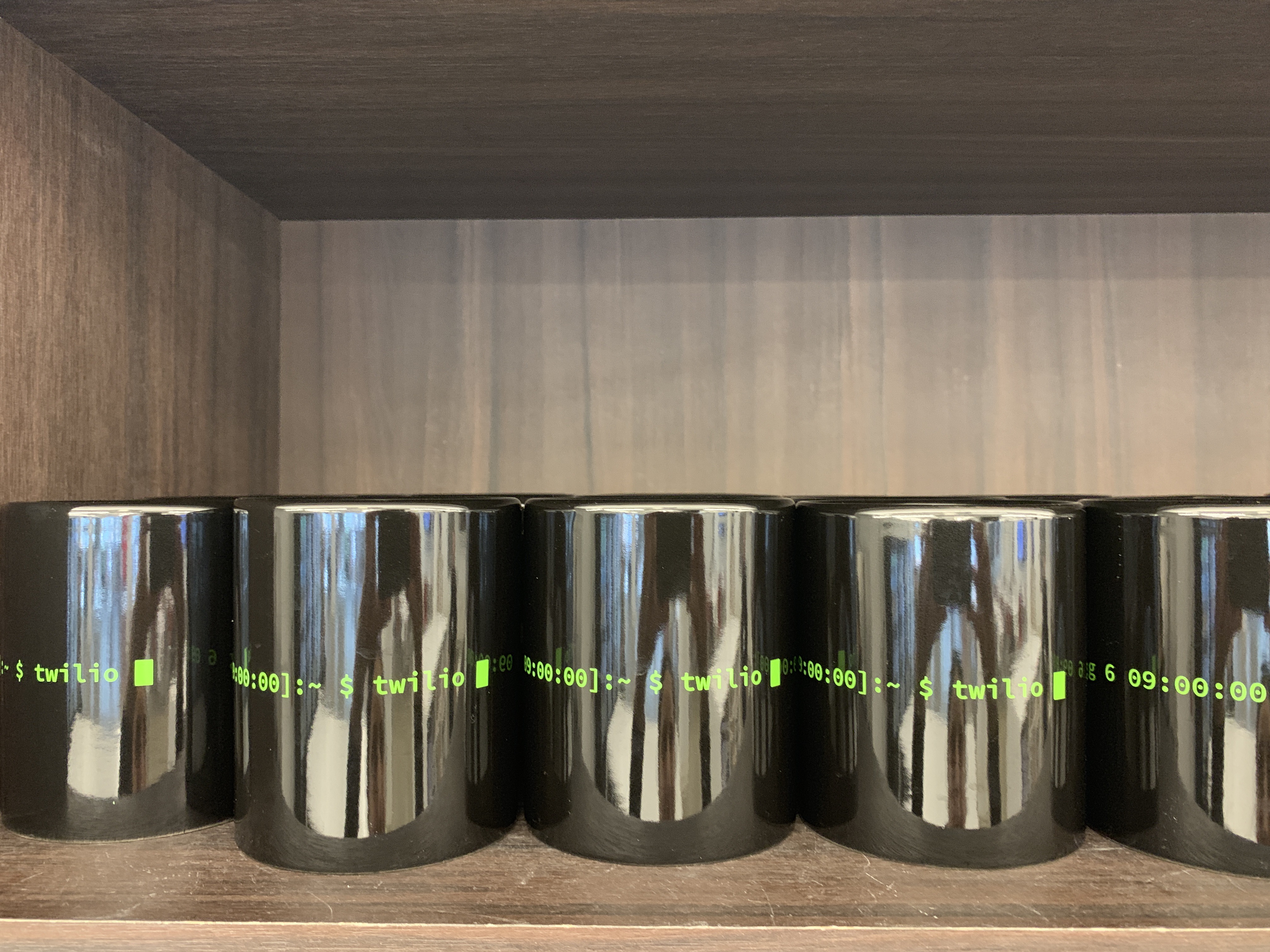
When we launched the Twilio CLI, I orchestrated what I called a kitchen takeover. Every office kitchen globally had its iconic red Twilio mugs quietly replaced overnight with black mugs branded for the CLI launch. Engineers walked in for their morning coffee, reached for the familiar red mug, and found a black one instead. It stopped them. It started conversations. We shipped those mugs to every region, not as swag, but as a disruption to routine.
For other launches, tactics have included:
- Balloons printed with the product icon filling the office
- Temporary tattoos distributed on launch day, turning employees into walking billboards who were genuinely having fun with it
- Custom stickers on fruit in the office kitchen because absurdity is memorable
- Posters hung inside bathroom stalls, where you have a genuinely captive audience


None of this is expensive. All of it is disproportionately effective.
Content That Earns Attention
Physical stunts create the moment. You also need content people actually want to consume.
The most effective internal launch content is often the kind that would never survive a brand review for external use. Because it's personal, raw, and human.
What works internally:
- Unpolished video with high energy beats polished corporate video every time
- A real person explaining the launch in their own words lands harder than a deck
- Short-form, shareable, feels like it was made for people, not for records
Example: The card-flip video
For one launch, I created a time-lapse video of myself writing out the product story on cards and flipping them one by one. No production budget. No agency. Just a phone, a stack of cards, and a message worth delivering. It consistently outperformed polished corporate videos in internal engagement because it felt real. People shared it not because they were told to, but because they wanted to.
The bar for internal content is authenticity and energy. If the person leading the launch doesn't visibly care, why would anyone else?
The Audience You're Actually Trying to Reach
Your primary internal audience is the 80% of the company that had nothing to do with the launch but whose daily work is directly shaped by it.
Not the product team. They already know. Not engineering. They built it.
The people who matter most for internal evangelism:
- Recruiters need to weave the launch into their pitch for why a candidate should join. They need to feel the momentum, not just know the feature list.
- Regional marketing teams need to understand the narrative well enough to adapt it for local markets without diluting it.
- Sales teams, especially those outside the core segment, need talk tracks that let them mention the launch confidently even if it's not their primary selling motion.
- Customer success needs to anticipate the questions that are coming.
- Executives need the one-liner for their next board meeting or dinner conversation.
Each of these audiences will carry your message further than any press release. But only if you've invested in making them feel like participants.
Build Anticipation Before the Announcement
The most effective internal evangelism follows a campaign arc. Tease what's coming. Seed curiosity. Let people discover clues before the official announcement.
A few principles that hold across launches:
- The internal campaign should start before the external one
- Leave breadcrumbs that generate speculation
- When the official announcement lands, it should feel like confirmation, not news
Example: The mug swap timing
The CLI kitchen takeover worked specifically because it preceded the formal launch. People were already talking before the email went out. When the all-hands announcement came, half the company was already buzzing with speculation. You've won before you've started when that's the case.
The same principle applied to bathroom posters that appeared days before anyone explained them. Confusion generates conversation. Conversation generates attention.
This Is a Leadership Investment
I've watched launch leaders dismiss internal evangelism as frivolous. The balloons and tattoos and fruit stickers can seem unserious to people focused on pipeline and press coverage.
But the leaders who build this muscle consistently produce:
- Launches with broader organizational support
- Faster sales adoption
- More authentic social amplification from employees who actually understand what shipped
Your external launch is a coordinated moment. Your internal launch is a cultural one. Companies that treat both with equal strategic intent are the ones whose launches actually compound over time.
The next time you're planning a launch, budget the same creative energy for the people inside your building as you do for the market outside it. Replace the mugs. Hang the posters. Put stickers on the bananas.
It sounds absurd. That's the point.