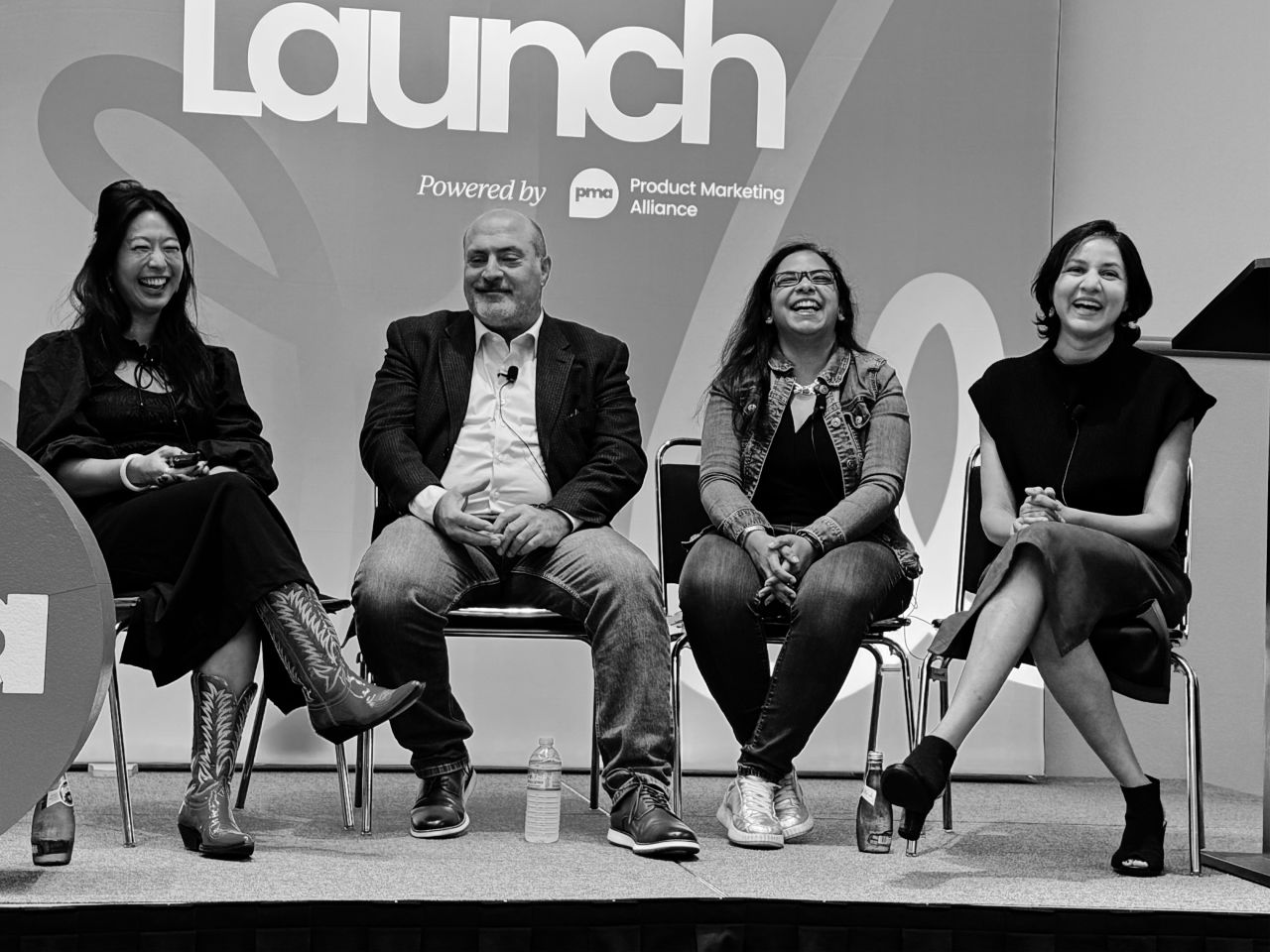
Product launch failures are hilarious. Just not while they’re happening. When the demo breaks, Slack is on fire, and your soul briefly exits your body, nothing feels funny. A couple of years later? Excellent storytelling material.
I’ve been in product marketing long enough to have collected a few of these stories. The kind where you look back and think, “How did we not see that coming?” The kind that taught me more than any successful launch ever did.
1. We Got 5,000 Signups and Wasted Almost All of Them
On paper, the launch was a win. Major customer conference, the kind that fills Moscone Center. Strong press coverage. We needed 5,000 beta signups and we got them. Marketing did its job.
Then everything fell apart on the other side.
Launching in beta means more hand-holding from PMs, more onboarding friction, more one-to-one attention. The PM team and the engineers supporting the product weren’t resourced to handle that volume. Servicing the demand would have meant stopping all new development and focusing entirely on onboarding. They weren’t there yet, and they didn’t have the tooling to make it faster. So all that interest just sat there.
When it takes six months to reach out to someone who raised their hand, they’ve already forgotten you exist. We learned this through frustrated posts on social media from people who signed up and heard nothing. That’s when we scrambled to set up follow-up emails covering access timelines, new features, learnings from early beta participants, and transparency into when the rest of the list would get in.
The lesson: Set expectations internally and externally before you launch. Define what success looks like beyond the signup number. Have a plan for every person who raises their hand. If you can’t service the demand, be honest about the timeline. Silence is what turns excitement into resentment.
2. We Built a Product Nobody in Our ICP Actually Needed
This one still stings.
The product started as an internal hackathon project: a developer tool for building automated workflows. Our CEO championed it. It won the hackathon. The energy was electric. So we decided to ship it.
What we skipped: any meaningful validation that we were solving a real problem for our actual customers.
We launched. Adoption came. But it was the wrong adoption. Instead of enterprises building production workflows, we got hobbyists prototyping for fun. They were on the free tier or using minimum credits. That was never going to move the revenue needle, and it also failed the other goal of the beta: getting real feedback on how large enterprises would actually use the product. Hobbyists couldn’t tell us that.
If you’ve ever been responsible for driving revenue from a product line, you know the sinking feeling. The numbers look fine. But where’s the revenue? Where are the enterprise deals?
We eventually folded the tool into a broader customer support platform as a GUI component, but the early momentum never translated to the revenue expectations we’d set.
The lesson: Internal excitement is not market validation. A hackathon win is not product-market fit. Before you invest in a full go-to-market effort, test the product and the positioning with your ICP. Document everything, because you will have launches that miss. Building for your actual buyer from day one saves you the painful pivot later.
3. We Almost Killed a Product That Was Keeping the Lights On
This one wasn’t a launch failure. It was almost an un-launch disaster.
We had a product driving a significant chunk of the company’s revenue. A major cross-sell driver, deeply embedded in our customer base. Then we acquired another company building something similar, and conversations started at the exec level about deprecating the existing product.
Rumors spread through the sales org. Morale dropped. The entire discussion was happening in a vacuum, detached from what that product actually meant to the business.
What saved us was doing the work nobody else was doing. I built the case: the revenue at risk, the customer overlap between this product and others in the portfolio, and how losing these customers wouldn’t just hit one product line but cascade across the business.
Acquisitions bring in new leaders eager to show momentum, and the nuance of what already exists gets lost fast. It takes someone strategic enough to write it down, brave enough to push back, and credible enough to be heard.
The lesson: Influence is a product marketing superpower. If you see a decision being made without the right data, build the case. Write the document. Quantify the risk. Be the person who brings clarity to a conversation moving too fast.
4. The Launch That Kept Moving Until It Didn’t
This one is less dramatic but probably the most universal.
Internal teams not ready until the last second. Dates that shift. Priorities that change. Screenshots you can’t get because the feature doesn’t look right yet.
You’re told a feature is launching on a certain date. You build the campaign. You brief the sales team. You write the blog post. Then the date moves. Then it moves again.
At Kustomer, we did two things to claw back some control. First, we launch every Tuesday. It’s a fixed cadence that gives PMs a clear target, and if they miss one, the next is only a week away. Second, we drew a hard line between product release and marketing launch. A product release is when the product is ready to go to customers. A marketing launch is when the market is ready for it. Those are two different things, and conflating them is where the chaos starts. We ask for at least a week between the two. That week is what lets us get the assets, the screenshots, the positioning, and the enablement materials right.
The lesson: Flexibility is a survival skill in product marketing. Build repeatable systems: fixed launch days, buffer windows, clear handoff criteria. That’s what lets you absorb the inevitable shifts without losing quality.
A Note on AI and the Temptation to Pivot Everything
The latest version of this problem is AI.
With tools like Cursor, Codex, and Claude Code, product teams are shipping faster than ever. That’s exciting. But it’s also creating a temptation for marketing: to pivot positioning every time the product evolves.
I’ve seen companies redo their website and their first-call deck every three months. The instinct makes sense. The product changed, so the story should change too.
Research suggests it takes a dozen or more touches with a prospect before they become an opportunity. If you’re changing your positioning multiple times during that journey, you’re not iterating. You’re starting over every time. Your message never gets sticky because it never gets the chance to land.
PMMs need to be the ones pushing leadership to commit to a vision and let it breathe. The tools are incredible. They don’t change the first principles of marketing. Consistency compounds. Constant pivoting erodes it.
The lesson: Just because you can change everything doesn’t mean you should. Protect your positioning the way you’d protect a product roadmap. Give it time to work before you tear it down.
The Through Line
Every one of these stories comes back to the same thing: product marketing is the connective tissue between what a company builds and what the market needs to hear.
When that connection breaks, because of misaligned expectations, missing validation, executive decisions made in a vacuum, or a shifting roadmap, the PMM feels it first. The PMM can also fix it. By documenting what went wrong. By building the case for change. By creating systems that absorb chaos. By having the conviction to push back when the organization is moving in the wrong direction.